









Are Polyurethane Suspension Bushes Worth the Upgrade? Whiteline Separates Fact from Fiction
22 October

{{ state.meta.isTrade ? 'Sign in or register to build customer quotes you can reuse.' : 'Sign in or create an account to save items for later.' }}

This {{ state.meta.labelSingular.toLowerCase() }} is empty.
Browse the site and click "{{ state.meta.labelAdd }}" on any part.

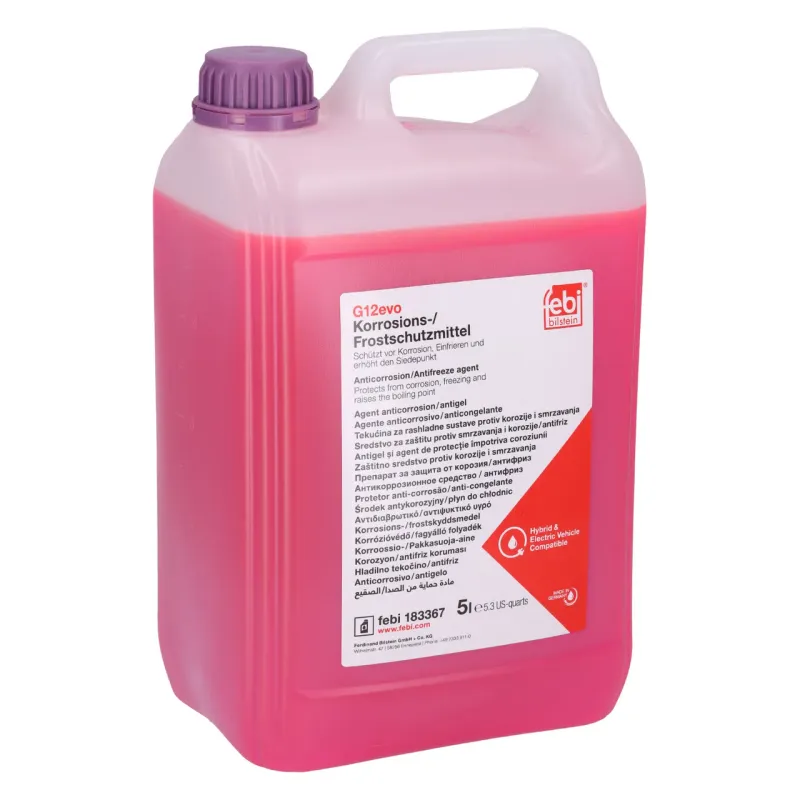
To fit: Various Volkswagen Group vehicles
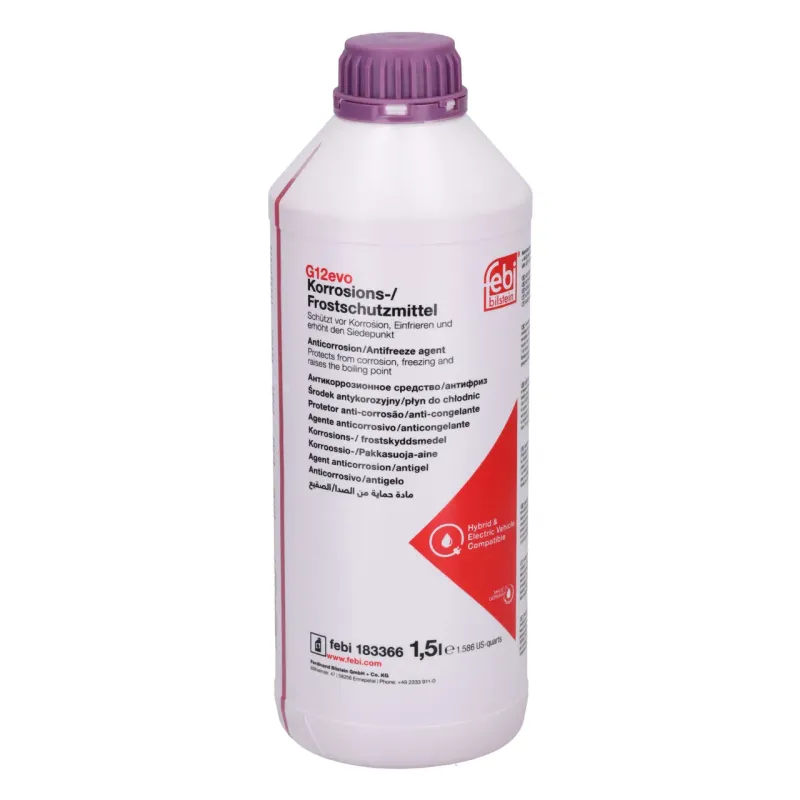
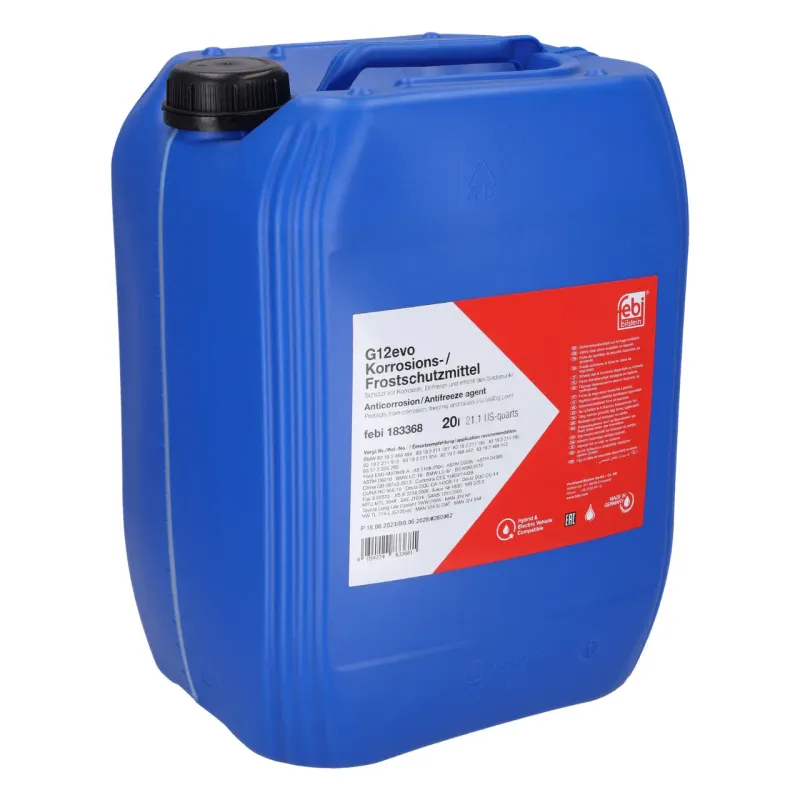
Volkswagen Group introduced the G12evo coolant into vehicle production in 2018 for the 2019+ model year vehicles.
This is the latest generation of premium concentrate coolant containing silicate. It offers long-term radiator antifreeze protection based on monoethylene glycol and uses a special additive technology which combines the benefits of coolants with and/or without silicate content.
The different inhibitors have been perfectly coordinated with each other in this specially developed technology. The product therefore provides not only long-lasting corrosion protection, but also ideal heat transfer and impressive high-temperature stability. Thanks to its excellent cavitation protection, and protection against deposits, it is also suitable for use in trucks and commercial vehicles.
It is ideal for many different cooling systems thanks to its excellent compatibility with the materials used in cooling system construction, such as various aluminium and casting alloys, polymers and elastomers.
The product meets the requirements of the latest Volkswagen technical supply specification TL 774-L (G12evo), which means it is also backwards-compatible with the following applications: VW TL 774-C (G11), D (G12), F (G12+), G (G12++), J (G13).
Febi G12evo is suitable for a complete system refill during routine service work or when a system component needs to be replaced, and, thanks to its backward compatibility with the coolants listed above, it can also be used for coolant top-ups.
This formulation of G12evo can now be mixed with any previous coolant variation, making choosing the correct coolant easier.
This table identifies which service coolants (left) can be added to the original factory-filled coolant (top).
Can be mixed with: | Blue G11 | Red G12 | Purple G12+ | Purple G12++ | Purple G13 | Purple G12evo |
|---|---|---|---|---|---|---|
G11 | ✓ | ✗ | ! | ! | ! | ! |
G12 | ✗ | ✓ | ! | ! | ! | ! |
G12+ | ✓ | ✓ | ✓ | ! | ! | ! |
G12++ | ✓ | ✓ | ✓ | ✓ | ! | ! |
G13 | ✓ | ✓ | ✓ | ✓ | ✓ | ! |
G12evo | ✓ | ✓ | ✓ | ✓ | ✓ | ✓ |
Green (✓) = Can be mixed in any ratio.
Yellow (!) = Mixing is possible, but it will cause a reduction in corrosion protection.
Red (✗) = Cannot be mixed. When G11 and G12 are mixed, aggressive acids are formed and the coolant can ‘clump’ and clog channels.
Check which coolant is in the cooling system. If unsure, a complete flush and refill is recommended.
Look for the coolant specification in the upper horizontal row.
Go down the green column. All coolant types of the green and yellow fields (described in the left vertical column) can be used; however, preferably coolant marked in a green field should be used.
However, while the coolants can be mixed as referenced in the chart, it is always best practice to completely replace the coolant when carrying out service work or replacing a component within the system, as mixing coolants can reduce corrosion protection. The exception is G12++ and G13, which are fully compatible.
Only mix distilled water with coolant additives.
Deionised water must not be used.
Drained coolant must not be reused.
When the coolant is replaced, the cooling system should be drained and refilled using the vehicle manufacturer’s instructions for each vehicle type.
This one’s not in stock at the moment. Leave us your details and we’ll find out when it’s due and email you.


